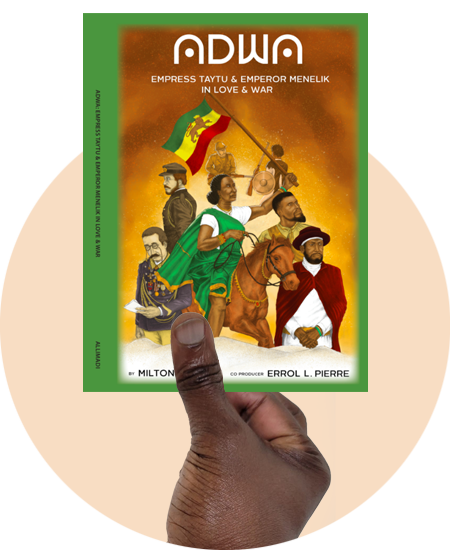
is the love story between Ethiopia’s 19th century Empress Taytu Betul and Emperor Menelik II and their victory—fighting together on the frontlines—against an invading Imperial Italian army seeking to colonize their country.

Milton Allimadi teaches African history as an adjunct professor at John Jay College in New York City and journalism at the Graduate School of Journalism at Columbia. He also publishes Black Star News and hosts a weekly news program “Black Star News Show” on WBAI 99.5 FM New York Radio also live-streamed on www.wbai.org
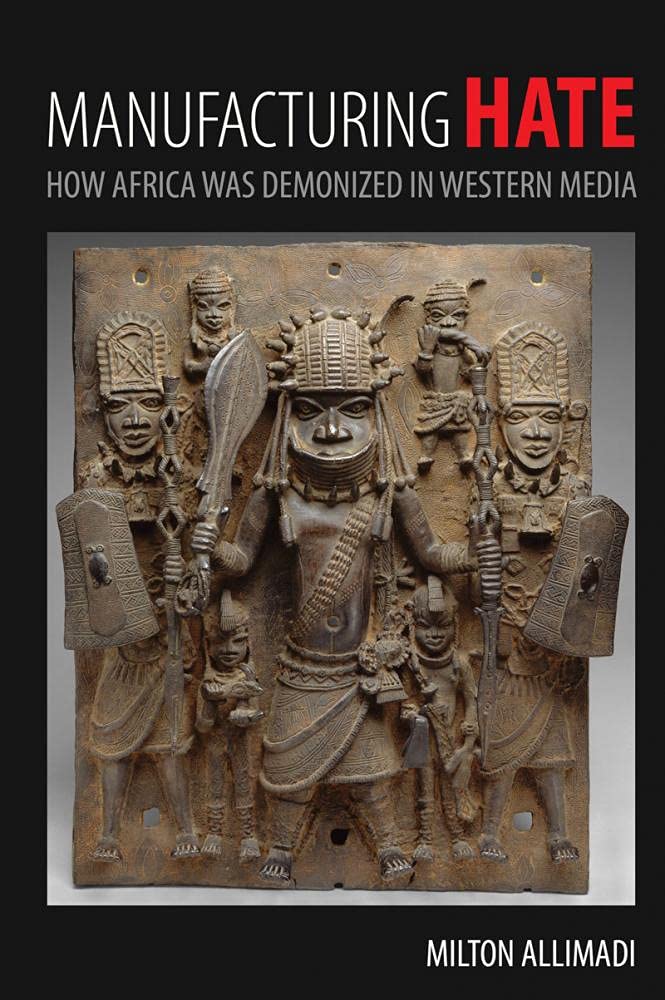
Allimadi is author of “Manufacturing Hate—How Africa Was Demonized in Western Media,” which chronicles centuries of demonization of Africa in Western books, magazines, and newspapers including The New York Times.
This is what KIRKUS REVIEWS said of his previous book Manufacturing Hate: “In this disturbing and compelling account of Western media’s inglorious coverage of Africa, John Jay College adjunct professor and Black Star News publisher Allimadi reveals how ‘Demonization of Africans was the handmaiden of conquest and colonization.’”
This is what reviewer Professor Georges Nzongola-Ntalaja said of Manufacturing Hate: “Overall, this is an outstanding work of scholarship, and one that should be read by undergraduates and students enrolled in studies of journalism and communications generally, as well as by the general public.”
Allimadi has a Masters degree in journalism from Columbia University and a Masters in Economics from Syracuse University.
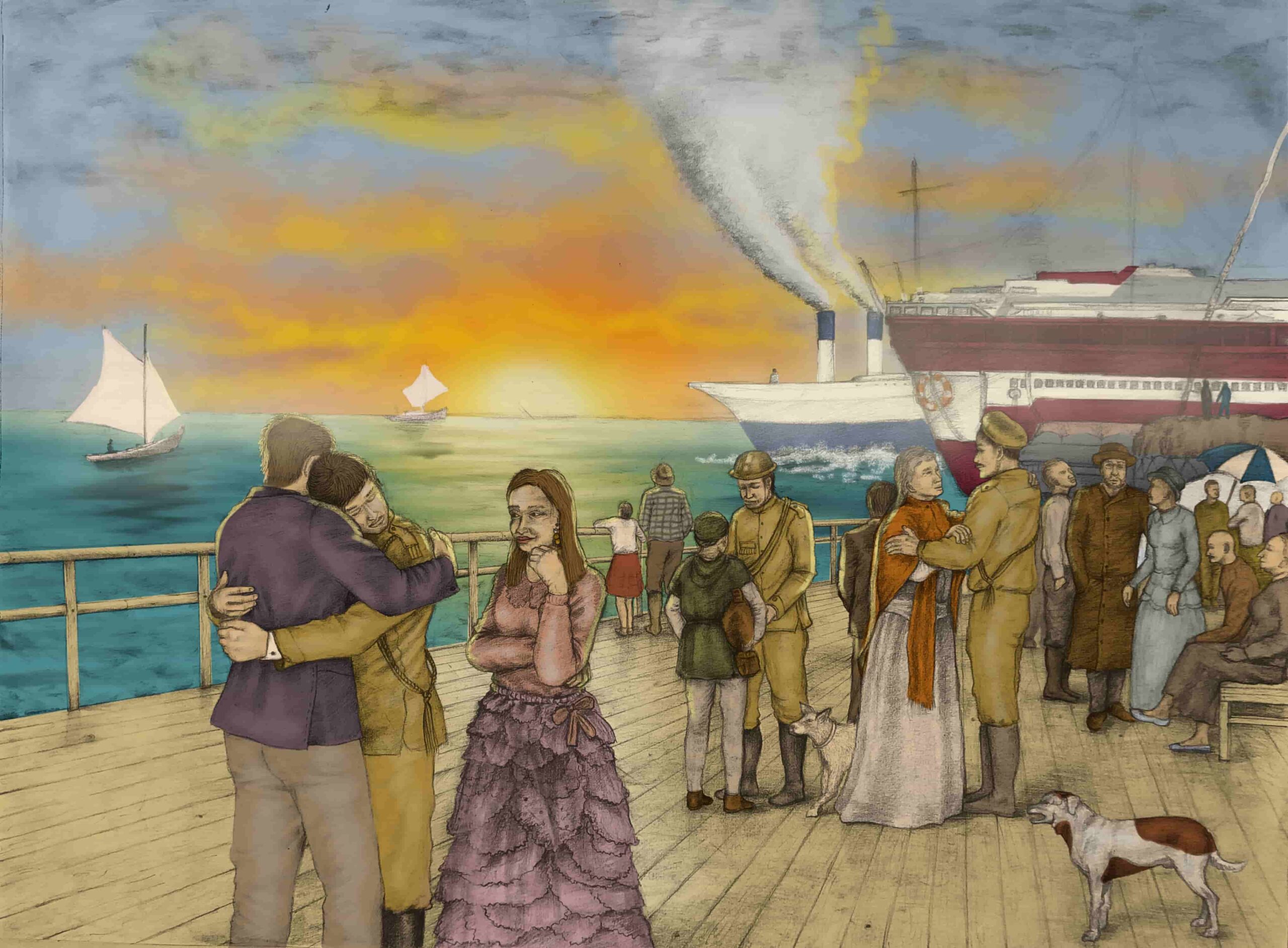
The ship carrying Oreste Baratieri approaches the coastline. Four White men stand on the deck near the bow. General Baratieri, peers at the coastline through binoculars. Next to Baratieri are Brigadiers General Vittorio Dabormida, Giuseppe Arimondi, Matteo Albertone, and Giuseppe Ellena. Baratieri breaks the silence.
“We approach Africa, gentlemen! Soon, Italian Africa! Viva Italian Africa! Savoy!” Baratieri declares.
“Viva Italian Africa! Savoy!” the other four generals declare.
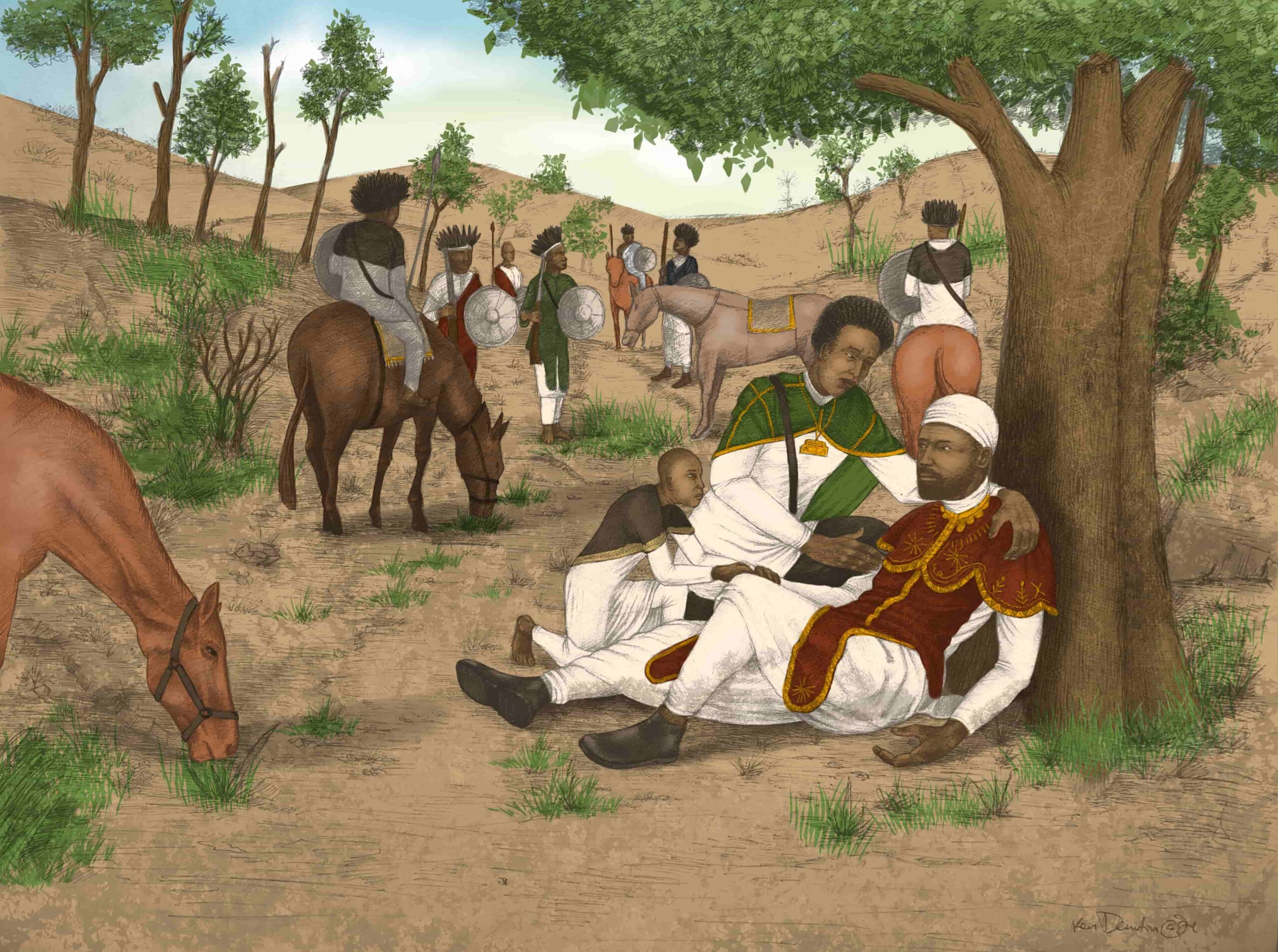
Before Menelik and Taytu arrive on the frontline with the main body of troops, Ras Makonnen is sent with an advance force. His army barely stops to set camp along the way.
By early December, Makonnen has deployed near the Italian fortified position at Amba Alage. The enemy has about 2,000 soldiers, including African soldiers, referred to as askaris, from Eritrea, the Italian colony. They are led by Major Pietro Toselli, the garrison commander.
Amba Alage is perched on a mountain at altitude of 13,000 feet, giving the Italians a spectacular advantage for cutting down the Ethiopians with artillery and rifle fire. As the royal couple’s arrival date nears, Makonnen feels pressure to attack. He wants some good news for the empress and emperor. Perhaps there is a chance of ousting the Italians from the fort without bloodshed? Makonnen dispatches a messenger on horseback with a short letter to Major Toselli.
The solitary messenger approaches the gates on horseback, waving a white flag.
The guards take the messenger to the commander. “How many men does your chief have at his disposal?” Toselli asks, while opening the letter.
The messenger smiles. “Commander Toselli, you know I cannot tell you that. But I assure you that my chief has enough men to to kill you and all your men,” he says.
An Eritrean soldier serving under Toselli steps forward as if to slap the messenger but Toselli grabs the soldier’s hand. “No, no, there is no need for that. Let our imprudent guest talk all the nonsense he wants. When the battle starts, he may beg to join our side,” he says.
“Phthew! How can a colonized African strike a free African,” the messenger says, and spits at the feet of the Eritrean. “As for you, commander Toselli, I assure you that you are the one who will cry in pain when your manhood goes under the knife.”
Toselli breaks the wax seal bearing Makonnen’s coat of arms and reads the letter out loud:
Dear Pietro Toselli, Commander, Amba Alage,
I have come to make war as my emperor orders. But my friendship for your commander in chief, General Oreste Baratieri, leads me to serve as a peacemaker. However, I must advance because my emperor is at Lake Ashenge, 25 miles to the south. Therefore I cannot stop my advance. You must leave the fort immediately.
Your friend,
Ras Makonnen Walda-Mikael.
Toselli sits on a stool next to a small wooden table and reads his reply out loud as he writes:
Dear Ras Makonnen, Commander, Ethiopian advance force.
To advance means war, the consequences of which we both cannot predict. Why would your emperor risk everything? Remember, by waging war, the great Emperor Tewodros was defeated by the British and lost his power and his life. Remember another great emperor, Yohannes, waged war with the Sudanese Muslims and lost his power and his life. Perhaps Ethiopia needs an emperor who is not reckless and who will not wage war. You are highly regarded across these lands and in Italy. We helped Menelik become emperor when we gave him Remingtons. We can help you become the next emperor should you join his majesty King Umberto’s side.
Your friend Pietro Toselli, Commander Amba Alage.
The messenger rides back to Makonnen’s camps and hands the letter to the Ras who unseals it and reads it. He tears it up immediately and bangs the table with his right fist.
“Insolence! Sacrilege! He really thinks I am a traitor against my emperor? My own cousin and benefactor?” Makonnen yells.
Makonnen asks for field glasses and gazes at the fort. The Italian flag flutters, arrogantly, defiantly. “Toselli had his chance to leave peacefully. Now he will taste Ethiopian cannon. Prepare the men for a 6:30 AM attack on the fort,” Makonnen orders.
“Yes, chief,” his chief of staff says.
Early the next morning, at 6 AM, Makonnen addresses his men. “Today is a great day for Ethiopia. Today, you sons of Ethiopia will have the honor of firing the first shots in this war to defend our country against the dirty enemy. Long live Menelik! Long live Itege! Long live Ethiopia!”
“Oyay! Oyay!” soldiers cry, while brandishing their weapons. “Long live Menelik! Long live Itege. Long live Ethiopia!”
Some are foot soldiers. Those from Oromo, spectacular horsemen, form the cavalry. Their horses wear necklaces made from the tanned testicular sacks of castrated defeated enemies.
The Italians hurl back the first Ethiopian assault with artillery. The cannons fire both shells and shrapnel, shredding the first wave of Ethiopian troops to pieces.
Toselli is in a jubilant mood and he addresses his troops. “You see how we cut them like little mice? If they come at us like this we will destroy this advance army and the main one within a day. Viva l’Italia! Viva Umberto! Savoy!”
“Viva l’Italia! Viva Umberto! Savoy!” the soldiers respond.
“This is what happens when a modern army of a civilized nation encounters a barbaric nation,” Toselli says. “This war is going to be too easy.”
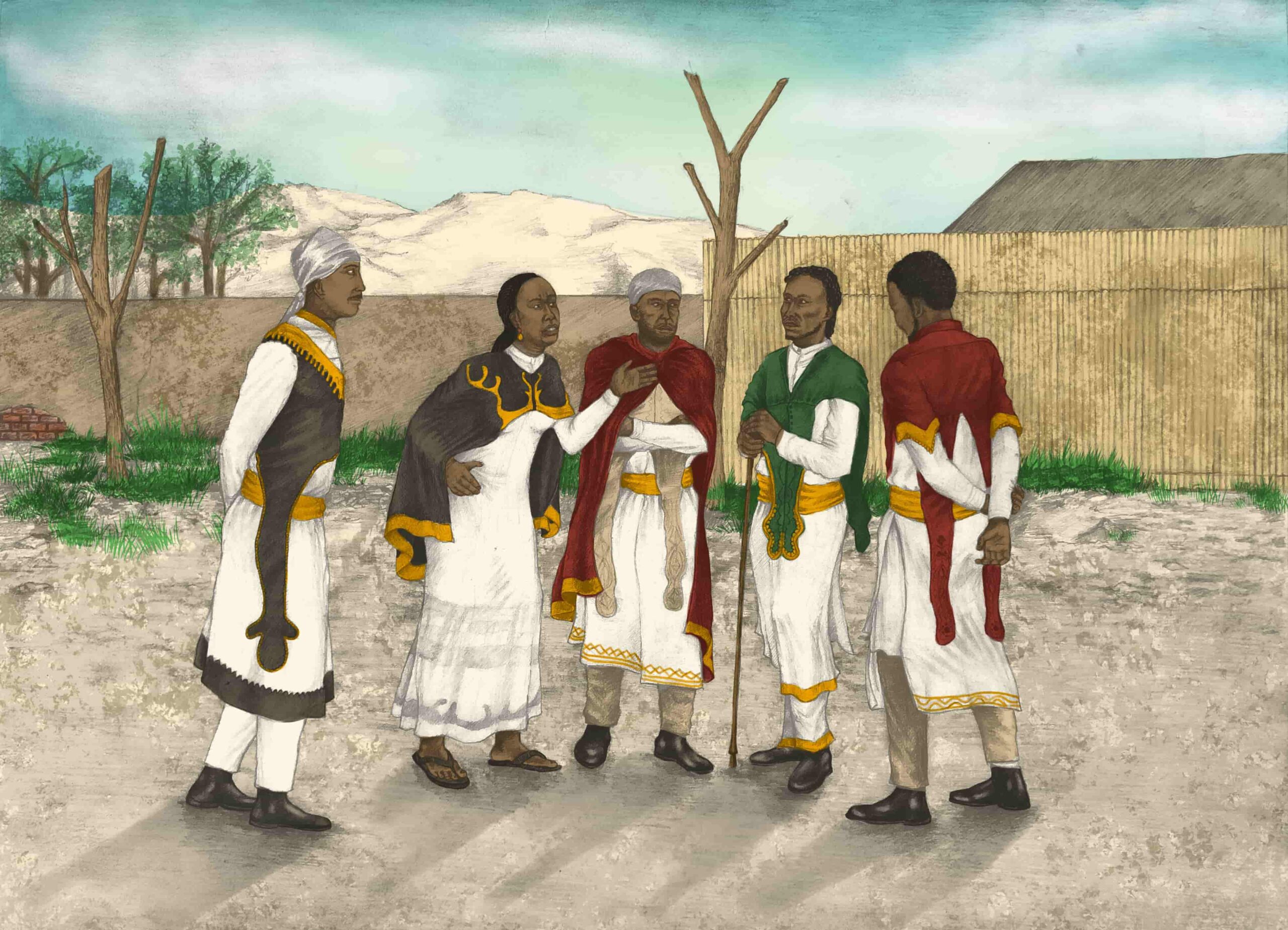
Later that night, Makonnen fumes as he plots strategy with his chief of staff and two senior commanders around a table. The compound is torch lit. They are all somber, grave, and in the mood for revenge. Today is a disastrous day.
“We lost too many men today,” Makonnen tells his commanders. “The Italian cannons are set on top of the fort. The walls have open space for their sharp shooters. Tomorrow I want us to attack from the right and overwhelm the columns outside the fort protecting their left flank. If we defeat them and they take flight toward the fort, we will pursue them closely. The fort will not fire cannon, for fear of cutting down their own men. This allows us to get close enough to breach the walls. Our cannon will trail us closely and once we get near we can fire over the walls.”
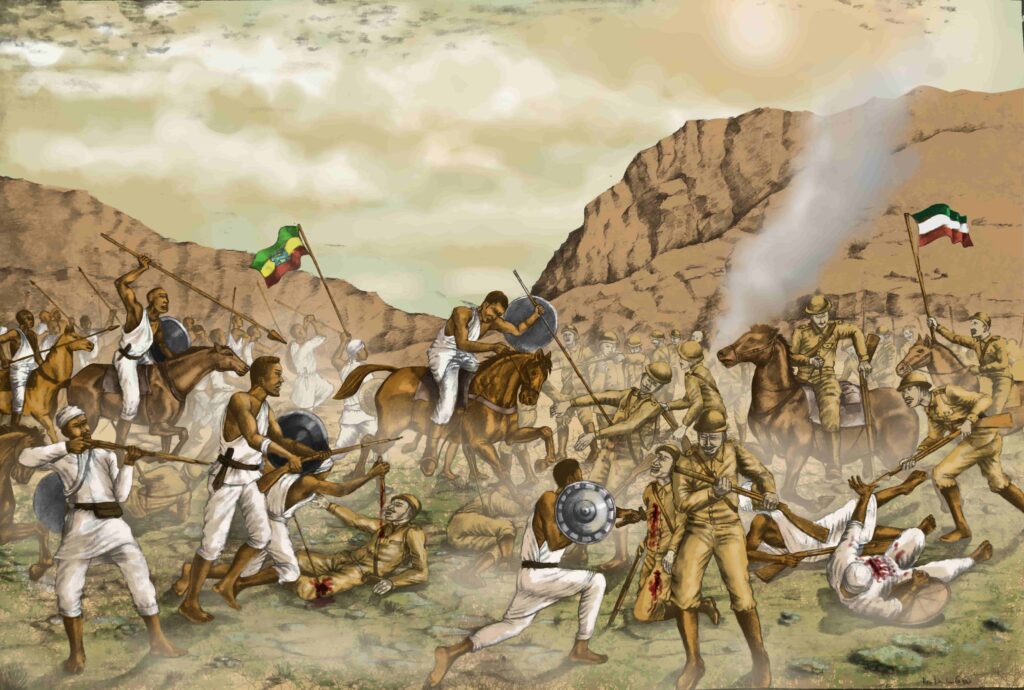
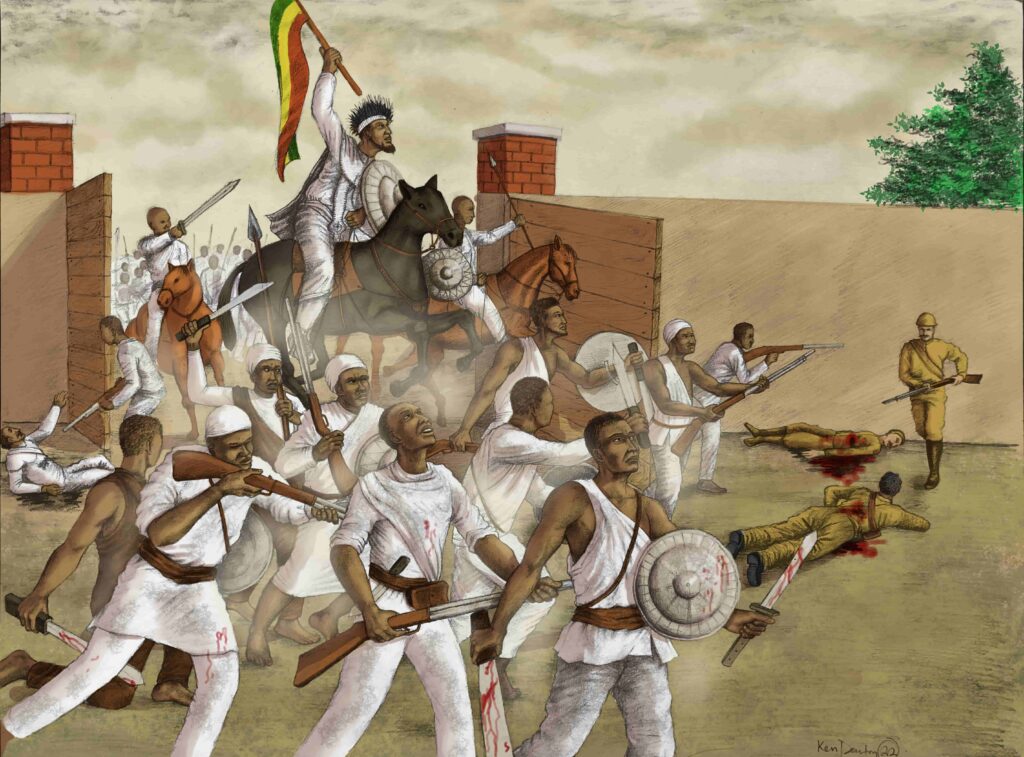
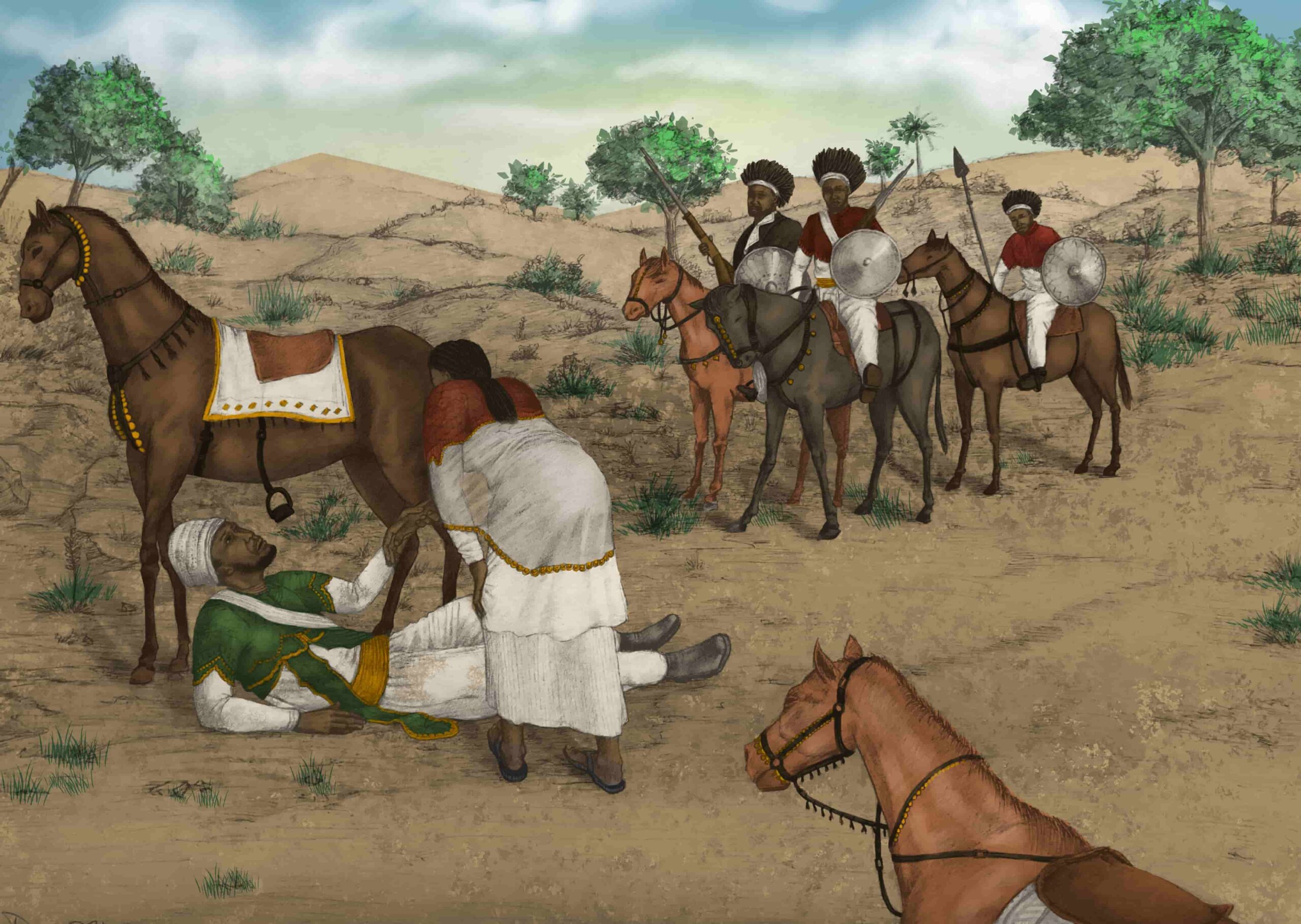
The next morning Makonnen’s forces execute his plan as drawn, with precision. The Italian flank collapses. The Ethiopians pursue the Italians. The fort withholds artillery fire as Makonnen predicts. Using horses, the Ethiopians drag their own cannons closer to the fort, and bombard over the walls. Some shots score direct hits on the gates, forcing a breach. As the Italian guards flee deeper into the fort, the Ethiopians are so close that many enter at the same time. The Italian soldiers at the gates are killed. The gates swing wide open.
Thousands of Ethiopian soldiers rush into the fort. The fighting is now close range, with rifles, swords, bayonets, daggers, and even bare hands. Some of the Italians use a side exit to flee. The escape route leads the Italians to a narrow footpath behind the fort that hugs the side of a mountain, yawning into a precipice with a 10,000 feet drop.
Ethiopian marksmen pick off the Italians as they slowly navigate the narrow path. A mule dragging a cannon loses its footing and plunges into the valley. An officer, lieutenant Marzio Manfredini, whose shirt sleeve entangles with the weapon,
is dragged to his death.
The cries of Italian soldiers facing the knife can be heard by those fleeing on the footpath and some, fearing capture and castration, place the barrel of a pistol into their mouths and pull the trigger. Others leap into the dark valley below.
Major Toselli, commander of the fort, is one of those killed that day when the
Ethiopians rout the Italians at Amba Alage, on December 7, 1895
is the love story between Ethiopia’s 19th century Empress Taytu Betul and Emperor Menelik II and their victory—fighting together on the frontlines—against an invading Imperial Italian army seeking to colonize their country. The couple, leading a large army, routed the Italians at the Great Battle of Adwa, on March 1, 1896, killing nearly 3,000 Italian soldiers and capturing almost an equal number in a mere six hours.

Allimadi is also author of “Manufacturing Hate—How Africa Was Demonized in Western Media,” which chronicles centuries of demonization of Africa in Western books, magazines, and newspapers including The New York Times.

How White Writers Created the Racist Image of Africa

The beautiful artwork—28 original color pieces—are by Ugandan artist Obedirwoth. For assignments and projects he can be reached via:


To invite the author for speaking engagements or book signings
reach him via texting (646) 261-7566 or via mallimadi@gmail.com